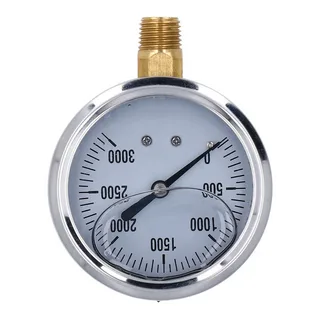
Liquid Filled pressure Gauge for Industrial Applications
Industrial processes depend on accurate pressure measurement to maintain safety, efficiency, and consistent product quality. Whether in chemical processing, oil and gas, pharmaceuticals, power generation, or food manufacturing, choosing the right Liquid Filled pressure Gauge plays a vital role in monitoring system performance.
Unlike conventional instruments, a Liquid Filled pressure Gauge is designed to perform reliably even in environments with excessive vibration, pulsation, and harsh operating conditions. The liquid inside the gauge minimizes pointer fluctuations, resulting in stable readings and longer service life.
In many industrial systems, a Pressure Gauge works alongside a Thermowell to monitor both pressure and temperature while protecting sensitive instruments from damaging process conditions. Understanding how these components work together helps industries improve equipment reliability and reduce maintenance costs.
What is a Liquid Filled pressure Gauge?
A Liquid Filled pressure Gauge is a pressure measuring instrument that contains glycerin, silicone oil, or another damping liquid inside its case. This filling protects the internal movement from vibration, shock, moisture, and dust while providing smoother pointer movement.
Compared to a standard Pressure Gauge, a liquid-filled model performs exceptionally well in demanding industrial environments where continuous machine vibration can make readings difficult to interpret.
The liquid acts as a cushion for the internal components, reducing wear and extending the lifespan of the gauge.
How Does a Liquid Filled pressure Gauge Work?
The working principle is similar to a standard Pressure Gauge. Pressure from the process enters the Bourdon tube inside the gauge. As pressure changes, the Bourdon tube flexes, moving the pointer across the dial.
The difference lies in the liquid-filled casing. The damping liquid absorbs vibration and minimizes pointer oscillation, allowing operators to obtain accurate and stable readings even on vibrating equipment.
This makes the Liquid Filled pressure Gauge suitable for continuous industrial operations where precision is essential.
Benefits of Using a Liquid Filled pressure Gauge
Improved Reading Stability
One of the biggest advantages of a Liquid Filled pressure Gauge is its ability to provide steady pressure readings. Vibrating machinery often causes ordinary gauges to display fluctuating values, making monitoring difficult.
The damping liquid stabilizes the pointer, improving readability.
Longer Service Life
Industrial environments expose instruments to continuous mechanical stress. A Liquid Filled pressure Gauge protects its internal components from excessive wear, reducing maintenance requirements and increasing operational life.
Better Protection Against Moisture
The sealed liquid-filled case prevents moisture from entering the gauge. This reduces corrosion and keeps internal mechanisms functioning properly over time.
Enhanced Resistance to Shock
Heavy industrial machinery frequently produces sudden shocks. The liquid inside the Liquid Filled pressure Gauge absorbs these impacts, protecting sensitive moving parts.
Reduced Maintenance
Because the internal components experience less vibration and friction, the gauge requires fewer repairs and replacements compared to dry gauges.
Industrial Applications of Liquid Filled pressure Gauge
A Liquid Filled pressure Gauge is widely used across industries that demand dependable pressure monitoring.
Oil and Gas Industry
Oil refineries, drilling operations, and pipeline systems rely on pressure measurement to ensure safe production and transportation. A Liquid Filled pressure Gauge provides consistent readings despite equipment vibration.
Chemical Processing Plants
Chemical plants often operate under extreme pressure and temperature conditions. Accurate monitoring helps maintain process control while ensuring operator safety.
Water Treatment Plants
Water distribution and treatment systems use Pressure Gauge instruments to monitor pumps, pipelines, and filtration systems. Liquid-filled gauges improve reliability in outdoor installations.
Pharmaceutical Manufacturing
Maintaining controlled pressure is essential in pharmaceutical production. Stable measurements contribute to product quality and regulatory compliance.
Food and Beverage Industry
Food processing equipment operates continuously with frequent cleaning cycles. A Liquid Filled pressure Gauge withstands harsh environments while delivering accurate readings.
Power Generation
Boilers, turbines, compressors, and steam systems require reliable pressure monitoring to ensure safe and efficient operation.
Importance of Pressure Gauge in Industrial Systems
Every Pressure Gauge serves as an important monitoring tool for industrial equipment. Operators depend on pressure readings to identify abnormal conditions before they lead to equipment failure.
Benefits include:
- Improved process safety
- Early detection of pressure fluctuations
- Reduced equipment downtime
- Better preventive maintenance
- Enhanced operational efficiency
Selecting the correct Pressure Gauge for specific operating conditions is essential for maintaining accurate measurements.
Role of Thermowell in Industrial Instrumentation
A Thermowell is a protective fitting used to house temperature sensors without exposing them directly to the process fluid.
Industries frequently install a Thermowell alongside pressure monitoring instruments to obtain both pressure and temperature measurements while protecting sensors from:
- Corrosive chemicals
- High pressure
- High temperatures
- Abrasive process media
- Mechanical damage
Using a Thermowell allows technicians to remove or replace temperature sensors without shutting down the system, reducing maintenance time and improving plant productivity.
Choosing the Right Liquid Filled pressure Gauge
Several factors should be considered before selecting a Liquid Filled pressure Gauge.
Pressure Range
Choose a gauge with a pressure range suitable for your application. Operating continuously near the maximum range can shorten instrument life.
Process Media
The compatibility of wetted materials with the process fluid is essential to prevent corrosion and leakage.
Dial Size
Larger dial sizes improve visibility, especially in industrial environments where gauges are monitored from a distance.
Connection Type
Different industrial systems require bottom, back, or panel-mounted connections depending on installation requirements.
Operating Temperature
Extreme temperatures may require silicone-filled gauges instead of glycerin-filled models.
Accuracy Requirements
Critical industrial applications often demand higher accuracy classes for better process control.
Maintenance Tips
Although a Liquid Filled pressure Gauge requires less maintenance than dry gauges, periodic inspection remains important.
Recommended maintenance practices include:
- Inspect for leaks or damaged cases.
- Verify calibration regularly.
- Replace damaged gauges immediately.
- Keep dial faces clean for easy reading.
- Check mounting connections for tightness.
- Monitor liquid level inside the gauge.
Routine maintenance helps maximize instrument performance and service life.
Why Industries Prefer Liquid Filled pressure Gauge
Modern industries increasingly choose the Liquid Filled pressure Gauge because it delivers stable performance under demanding operating conditions. Its ability to resist vibration, moisture, and mechanical shock makes it an excellent choice for long-term industrial use.
When paired with a quality Pressure Gauge system and supported by a properly selected Thermowell, industrial facilities can achieve safer operations, more accurate monitoring, and reduced maintenance costs.
Conclusion
Pressure measurement is a critical aspect of industrial process control, and selecting the right instrumentation significantly impacts operational efficiency and equipment reliability. A Liquid Filled pressure Gauge offers superior performance in environments where vibration, pulsation, and harsh conditions would affect standard gauges.
Combined with a dependable Pressure Gauge and a durable Thermowell, industries can improve measurement accuracy, protect valuable equipment, and support safer working environments. Investing in the appropriate pressure monitoring solution helps organizations reduce downtime, extend instrument life, and maintain consistent process performance across a wide range of industrial applications.
Post Author: admin