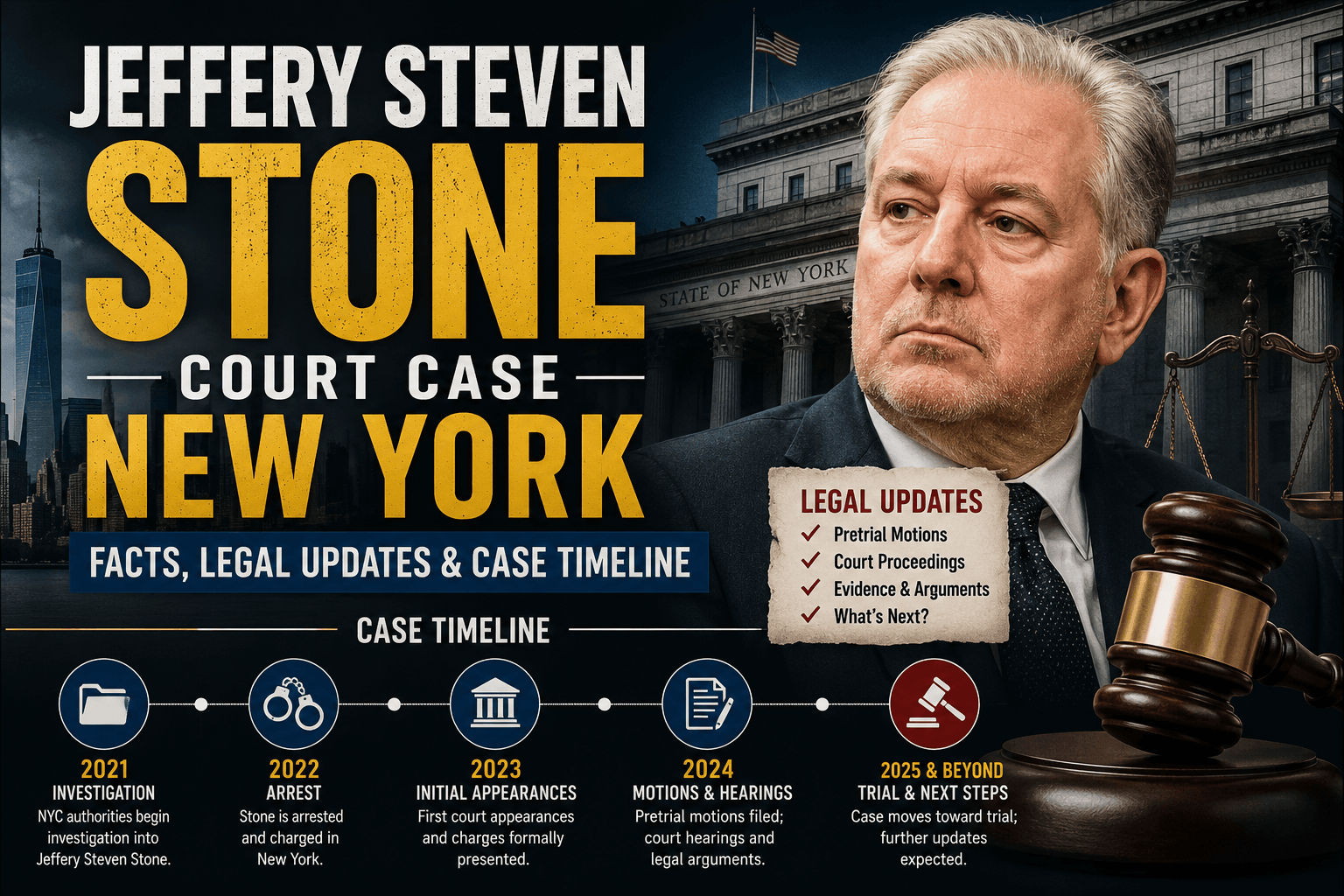
Jeffery Steven Stone Court Case New York: Facts, Legal Updates & Case Timeline
Legal proceedings often attract significant public attention, especially when they involve business professionals, investors, or financial organizations. However, it is equally important to distinguish verified facts from speculation. This article provides an informational overview of the Jeffery Steven Stone court case in New York, explaining how court cases typically progress, the importance of relying on public records, and what readers should know when researching legal matters.
The purpose of this guide is to present general legal information while emphasizing the importance of consulting official court documents and verified sources for the most accurate and up-to-date information.
Understanding Court Cases in New York
New York has one of the largest and most active court systems in the United States. Court cases may involve civil disputes, commercial litigation, financial matters, contractual disagreements, regulatory issues, or criminal proceedings.
Each case follows a structured legal process designed to ensure fairness, transparency, and due process for all parties involved. Importantly, the existence of a court case does not automatically determine liability or wrongdoing. Courts evaluate evidence, hear legal arguments, and issue decisions based on applicable laws.
When researching any legal matter, readers should rely on:
- Official court filings
- Publicly available judicial records
- Verified legal documents
- Statements issued through authorized legal representatives
Avoid relying solely on social media discussions or unverified online commentary.
Why Accurate Information Matters
Online searches frequently generate numerous articles, blog posts, forum discussions, and opinion pieces. While some may contain useful information, others may include outdated or inaccurate details.
Responsible legal reporting should always:
- Present verified information
- Avoid speculation
- Distinguish facts from opinions
- Respect the legal process
- Update information when new court records become available
This approach helps readers make informed decisions without spreading misinformation.
General Court Case Timeline
Although every legal matter is unique, many New York court cases follow a similar progression.
1. Filing of the Case
The legal process begins when one party files a complaint or petition with the appropriate court.
The filing generally includes:
- Identification of parties
- Legal claims
- Relevant facts
- Requested relief
The court assigns a case number and schedules future proceedings.
2. Service of Legal Documents
The opposing party receives formal notice of the lawsuit through legal service.
This ensures every party has an opportunity to respond.
3. Initial Court Proceedings
Early hearings may address procedural issues, scheduling, or preliminary legal arguments.
The court establishes deadlines for:
- Discovery
- Motions
- Evidence submission
- Future hearings
4. Discovery Process
Discovery allows both sides to exchange information relevant to the case.
This may include:
- Documents
- Emails
- Contracts
- Financial records
- Witness testimony
- Expert reports
Discovery is often one of the longest stages in litigation.
5. Motions
Before trial, attorneys may submit legal motions requesting specific rulings from the court.
Examples include:
- Motion to dismiss
- Motion for summary judgment
- Discovery-related motions
- Procedural requests
These motions may resolve certain issues before trial begins.
6. Trial
If the dispute is not settled or dismissed, the matter may proceed to trial.
During trial:
- Evidence is presented
- Witnesses testify
- Attorneys make legal arguments
- Judges or juries evaluate the facts
The court then issues its decision.
7. Appeals
After judgment, either party may seek appellate review if they believe legal errors occurred during the proceedings.
Appeals focus on legal issues rather than re-examining every factual detail.
Importance of Public Court Records
Court records play a central role in understanding any legal matter.
Public records may include:
- Court filings
- Hearing schedules
- Judicial decisions
- Orders
- Opinions
These documents provide significantly more reliable information than rumors or unofficial summaries.
Researchers should always prioritize official records whenever possible.
Business and Financial Litigation
Many New York court cases involve business-related disputes.
Common examples include:
- Contract disagreements
- Investment disputes
- Securities litigation
- Partnership conflicts
- Regulatory matters
- Corporate governance issues
Business litigation can be highly complex and often requires extensive documentation and expert analysis.
It is important not to assume the outcome of a dispute before the court reaches a final decision.
Evaluating Online Information Carefully
Search engines often display a combination of:
- News articles
- Blog posts
- Public databases
- Legal directories
- Forum discussions
- Social media content
Not every result carries equal credibility.
When evaluating information, readers should ask:
- Is the source reputable?
- Does it cite official court records?
- Is the information current?
- Are facts separated from opinions?
- Has the article been updated?
Responsible research involves reviewing multiple reliable sources before forming conclusions.
Respecting Due Process
One of the most important principles in the legal system is due process.
Due process ensures that:
- Every party receives notice.
- Both sides may present evidence.
- Legal arguments are fully considered.
- Courts apply established legal standards.
- Decisions are based on evidence rather than public opinion.
This principle protects the integrity of the justice system and promotes fairness throughout legal proceedings.
Common Questions About Court Cases
Does filing a lawsuit prove wrongdoing?
No.
A filed lawsuit represents legal allegations or claims. Courts determine the merits of those claims through the legal process.
Are court records public?
Many court records are publicly accessible, although certain documents may be sealed or subject to confidentiality rules.
Can online information be inaccurate?
Yes.
Some online content may contain outdated information, incomplete reporting, or unsupported opinions.
Always verify information using official records whenever possible.
Why do court cases take time?
Complex legal matters often involve:
- Extensive document review
- Multiple hearings
- Expert witnesses
- Settlement discussions
- Procedural requirements
These factors can significantly extend the duration of litigation.
Staying Updated on Legal Proceedings
Legal matters can evolve over time.
Court schedules may change because of:
- Additional filings
- Continuances
- Settlement negotiations
- Judicial scheduling
- Appeals
Readers interested in following a case should monitor official court records and reputable legal reporting rather than relying on speculation.
Responsible Legal Research
Whether researching a business dispute or an individual court case, best practices include:
- Reading official filings carefully.
- Comparing multiple credible sources.
- Avoiding assumptions based on incomplete information.
- Understanding that legal proceedings may continue for months or years.
- Waiting for final judicial outcomes before drawing conclusions.
This approach helps ensure a balanced understanding of complex legal matters.
Conclusion
The Jeffery Steven Stone court case in New York is a topic that may generate public interest, but understanding any legal proceeding requires careful attention to verified facts and official court records. Court cases follow established legal procedures designed to ensure fairness, transparency, and due process for everyone involved.
Rather than relying on rumors or unverified online discussions, readers should consult authoritative sources and recognize that legal matters often evolve as new filings, hearings, or judicial decisions occur. An informed, objective approach allows individuals to better understand the legal process while respecting the rights of all parties.
Post Author: admin